
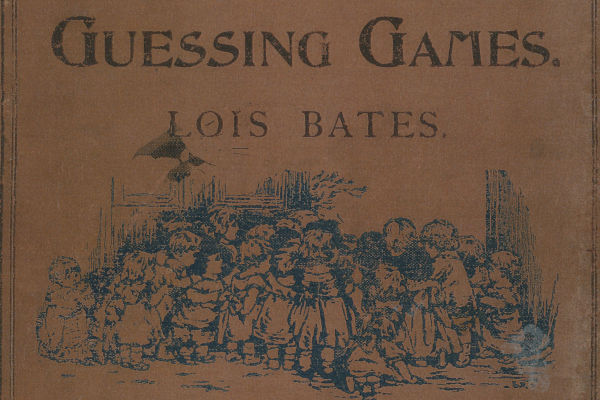
Lois Bates 1855-1932
Read about Lois Bates, a pioneering educator, headmistress of Saltaire’s Albert Road Infant School, and a prolific author who transformed early-years teaching through Froebelian kindergarten principles.
Early life
A pioneer of Froebelian kindergarten teaching, Lois Bates was born in 1855 to Matthew Bates, a woollen commissioning agent, and his wife Mary.
One of seven children, she spent her early years in Almondbury, Huddersfield. By the 1871 Census her mother had been widowed and Lois, aged sixteen, was working as a domestic servant.
Teaching in Huddersfield
However, by 1874 she was a pupil teacher at Spring Street School, Huddersfield gaining qualifications in history, English, needlework, vocal music and new notation. She later became headmistress of Hillhouse School Infants Department receiving a salary of £90, later increased to £100.
Her skills were highly sought after. The Huddersfield Chronicle reported that Titus Salt Junior (who was committed to Froebelian kindergarten teaching) and two members of the Saltaire School Board had visited another Huddersfield teacher for a role in Saltaire but after seeing Lois they had appointed her instead.
The Huddersfield Board were not pleased and accused them of ‘poaching’ at least three headteachers from Huddersfield! However, Lois did not forget her links with Huddersfield. In 1893 she acted as a judge for kindergarten work in an exhibition of work carried out in Huddersfield School Board’s day and evening schools.
Headmistress in Saltaire
Appointed to Albert Road Infant School, Saltaire in 1880 on a salary of £130, Lois showed her commitment to her pupils’ wellbeing.
She suggested practical measures to reduce draughts, resulting in the installation of folding doors in 1882. She also conceived the idea of a May Festival which she hoped ‘would contribute to the happiness of the 230 infants in her care.’ The proceeds were used to buy new toys for the playground thus rewarding the children for their efforts.
Class size and staff sickness may be issues today but in 1885 Lois had similar problems. After the May Festival the number of pupils increased. Her staff were only meant to teach 190 so she was forced to write to the School Board requesting an additional assistant as otherwise each class would have 40 to 50 pupils!
The strain of such conditions may explain why she twice lost her voice in 1886, prompting the School Board to warn that ‘steps would have to be taken’ if it happened again!
In 1887 eighty children under the age of six took part in the Saltaire Exhibition – performing drill, Maypole dancing, singing, games and housekeeping in the form of a ‘dinner party.’
The Shipley Times and Express (5 July 1890) described Lois as ‘full of enthusiasm and love of her work’. She believed in children using their imaginations and the value of play. Her ‘sensible ideas’ included the influence of good songs, drill and kindergarten games on manners, health and education.
She remained at Albert Road School for fifteen years, shaping early-years education both locally and nationally. At a 1929 meeting on educational progress in Shipley, Albert Road School, under her leadership was described as being ‘famous throughout the North of England’ with so many visitors that visits had to be rationed to one day a week and even then they were often crowded!
Publications and later life
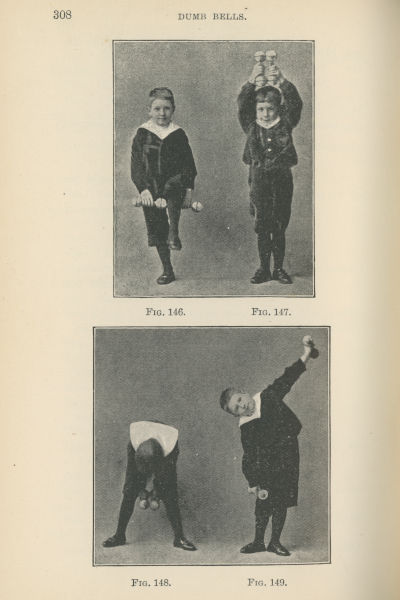
Lois was not only a well-respected headmistress but also the author of a number of instructional books for infants. These included Saltaire Action Songs (1890), Guessing Games (1893) – a review of which mistakenly referred to her as ‘Mr Lois Bates’ – and New Recitations for Infants (1895).
Her classroom career ended in February 1895 when she married John E. Wright, a master mariner from Castleford at Saltaire Wesleyan Chapel.
However, her writing continued. Lois went on to produce Games Without Music for Children (1897), Kindergarten Guide (1897) Saltaire Kindergarten Games, and Story Lessons on Character Building (Morals) and Manners (1900).
She also adapted many books in the Longman Infant Fairy Readers series. These books, based on classic folklore and fairy tales helped with early literacy skills. They included A Fairy Tale of a Fox, a Dog, a Cat, and a Magpie (1904) and A Fairy Tale of a Dog and an Old Dame by the Sea (1908).
Lois also collaborated with Arthur Pearson, a prominent Shipley musician, on The Golden Age of Sunday Schools.
Legacy
Lois and John spent their later life in Sculcoates, Kingston upon Hull and Bridlington. Lois died a widow in 1932 at the age of 77, leaving £1576 9s 6d and an outstanding legacy as both a successful and popular educator and author.
Tracey Williams 2026
Discover more working women associated with Saltaire
Lois appears in our online exhibition of Working women of Saltaire
References
Colin Coates timeline