
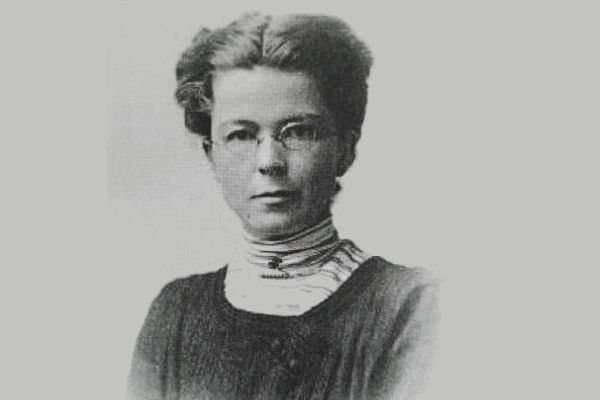
Hilda Margaret Byles M.B. B.S. 1879 to 1931
Read about Hilda Margaret Byles, a pioneering medical missionary who dedicated her life to serving the people of Hankow, China. A skilled physician specializing in obstetrics, she provided essential care to the marginalized despite political instability and harsh conditions.
Early Life and Family
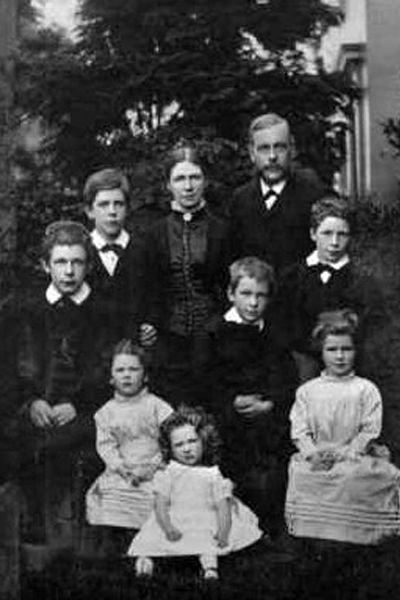
Hilda was born in Headingley, Leeds, on 28 August 1879. She was the fifth of seven children and the eldest daughter of Louisa and William Holden Byles, a businessman and Congregational Church minister.
The wider Byles family were well known and respected in Bradford. Her grandfather, William Byles, owned the Bradford Observer, and her uncle, William Pollard Byles, was a prominent social reformer and Liberal MP for Shipley.
Among her siblings, her older brother Father Thomas Roussell Byles, a Catholic priest, became widely remembered for his heroic actions during the sinking of the RMS Titanic in 1912, where he perished while ministering to passengers.
Education
Hilda attended Salt High School for Girls, where her aunt, Harriet Byles, served as headmistress. A gifted student, she won a County Major Scholarship to the Yorkshire College (later the University of Leeds).
In 1901 she passed the Preliminary Scientific Examination of the University of London. She entered the London School of Medicine for Women, qualifying as a doctor in 1906.
Missionary Work in China
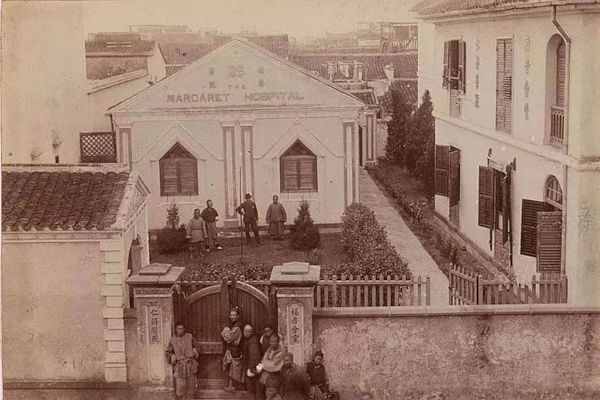
During her student years, Hilda was an active member of Whitefield’s Central Mission on Tottenham Court Road.1 In June 1907, shortly after qualifying, she travelled to China to take charge of the Margaret Memorial Hospital. Margaret Memorial was the women’s section of Renji Hospital (later the Union Hospital) in Hankow (now part of Wuhan).
Missionary work in China at the time carried significant risks due to political instability, anti‑foreign sentiment, and the lingering trauma of the Boxer Rebellion. Despite these dangers, Hilda quickly acquired a working knowledge of Chinese, eventually becoming fluent, and earned the respect of the local community.2
In Hankow, she devoted herself to caring for people, including the destitute, lepers and girls trapped in prostitution. She sometimes placed herself in considerable personal danger. Hilda was one of the earliest female specialists in gynaecology and obstetrics in China. She oversaw the training of Chinese obstetric nurses, enabling them to provide skilled care to women in their own homes1.
Conditions in Hankow were frequently challenging. After the original hospital building was sold, Hilda converted a godown (a warehouse) into a temporary hospital, only for it to be later condemned, forcing yet another move. Throughout these upheavals, colleagues recalled that ‘she was bright and brave and met them with a smiling face.’2
Her Christian faith and evangelism were central to her life. Alongside her medical work, she preached the Gospel in the hospital, chapel, and people’s homes, led services at the Tu-tang Church, and held Bible classes.
Death and Funeral
Hilda died of pneumonia in Hankow on 25 July 1931, aged 51. Simultaneous funeral services were held in Hankow and Kuling.
Her obituary in the China Medical Journal recorded that, despite rapidly rising floodwaters in Hankow, people travelled from three cities in Wuhan to attend her funeral. Reports say that the floodwater was knee deep in front of the Hua-lou church. Many wept openly, a testament to the deep affection and gratitude felt for a woman who had dedicated her life to serving others.2
Legacy
Hilda’s legacy continued after her death. In recognition of her work, Byles House, a three‑storey red‑brick and timber building, was constructed in Hankow with donations from local people and used as a nurses’ dormitory. The building is now considered of significant historical importance.3
In October 2021, a year‑long renovation of the building began, with great care taken to preserve the original structure. Today, Byles House has been reborn as the Union Hospital History Museum 3, an enduring tribute to Hilda’s compassion, courage, and lifelong service.
Jane Smith 2026
Discover more working women associated with Saltaire
Hilda appears in our online exhibition of Working women of Saltaire
References
- British Medical Journal, 01 Aug 1931, 2(3683):278
PMID: 20776324 PMCID: PMC2314376. Accessed 12th July 2026 - China Medical Journal 1931, page 926 Accessed at mednexus.org on July 12, 2026
- Union Hospital, Opening of Union Hospital History Museum. https//www.whuh.com/en/info/1007/1743.htm. Accessed 12th July 2026